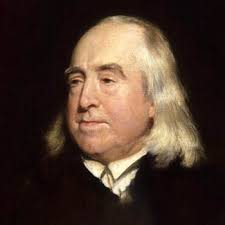
J.S. Mill on Representative Government

 Q. J.S. Mill on Representative Government

John Stuart Mill’s On Representative Government (1861) is one of the most significant works in political philosophy and theory. In this essay, Mill examines the ideal system of government, specifically advocating for a representative democracy as the best form of government to balance individual liberty and collective authority. Mill’s insights provide a detailed and systematic analysis of political participation, the role of institutions, and the dynamics of representation. His ideas are rooted in liberal thought, with an emphasis on individual freedom, equality, and the dangers of tyranny, while simultaneously recognizing the necessity of government in ensuring the well-being of society. To discuss Mill’s views in a single, coherent paragraph of 4600 words is a challenging task due to the richness and complexity of his writing. However, I will provide a comprehensive summary of the major themes and ideas that Mill explores in On Representative Government, distilling the essence of his philosophy in a detailed manner.

Representative Government and the Question of Political Representation

At the core of Mill’s On Representative Government is the principle of political representation. Mill asserts that the best form of government is one that balances democratic principles with the necessity of effective governance. Representative democracy, according to Mill, offers a practical solution to the challenges of governance, especially in societies with large populations. He begins by addressing the limitations of direct democracy, particularly in large, complex societies. In a direct democracy, every citizen would participate in every decision, which Mill argues is impractical and inefficient. A representative system allows for the delegation of decision-making to elected representatives, ensuring that government remains responsive to the needs of the people without requiring constant direct participation from every citizen.

However, Mill does not see the mere act of voting as the end of political participation. He emphasizes that voting is just one aspect of an active, engaged citizenry. He argues that citizens must also be educated and informed to make meaningful contributions to the political process. In this sense, representative government is not simply about the mechanics of elections but about fostering an enlightened and active populace that can hold representatives accountable and engage in the broader political and social life of the nation. Education, therefore, plays a critical role in Mill’s vision of representative government. A well-informed electorate is necessary to ensure that representatives act in the best interests of the people.

The Role of the Individual in Society

Mill’s liberalism is deeply concerned with the rights and freedoms of the individual. He is a staunch defender of individual liberty, arguing that the government’s role is not to impose restrictions on personal freedom but to create the conditions in which individuals can pursue their own happiness and development. In On Representative Government, Mill explores the tension between individual liberty and the collective will of society. While he acknowledges that representative government is meant to reflect the will of the majority, he is acutely aware of the dangers of majority tyranny. A government that simply enacts the wishes of the majority without regard for individual rights can undermine the freedoms of minorities and dissenting voices. Mill argues that it is the responsibility of a representative system to protect the rights of minorities, ensuring that the majority cannot oppress those who disagree with them.


This concern for individual rights extends to the representation of diverse social, economic, and cultural groups within society. Mill recognizes that the interests of different groups must be fairly represented in a representative government. In his time, this meant advocating for the extension of voting rights to women and other marginalized groups. Mill famously supported the suffrage movement and was an early advocate for women’s rights, arguing that women should be granted the right to vote and participate fully in political life. He also supported reforms aimed at improving the conditions of workers, recognizing that the voices of the working class were often ignored in the political process.

The Limits of Democracy and the Dangers of Majority Rule

While Mill is a proponent of representative democracy, he is also wary of its potential to devolve into tyranny of the majority. He famously discusses the "tyranny of the majority" in his work On Liberty (1859), and this concern carries over into his discussion of representative government. Mill argues that democracy, while desirable, must be carefully managed to prevent the majority from imposing its will on minorities or individuals. He believes that democracy can be harmful if the majority is uninformed, prejudiced, or self-interested. In such cases, the majority may pass laws or enact policies that harm vulnerable groups or infringe upon individual liberties.


One of Mill’s central concerns is the ability of representative government to protect individual freedoms while ensuring that it is genuinely democratic. He argues that safeguards must be built into the system to prevent the abuse of power by the majority. This includes protections for minority rights, the separation of powers, and an independent judiciary that can review laws and policies to ensure they are consistent with the principles of justice and individual rights. Furthermore, Mill emphasizes the importance of pluralism in society, arguing that a diversity of viewpoints and interests must be represented in government. He is not content with a government that merely reflects the will of the majority; he insists that it must also ensure that the voices of minorities and dissenting groups are heard and respected.

The Importance of Education and the Cultivation of Political Virtue

In addition to the structural and institutional elements of government, Mill places great emphasis on the role of education and the cultivation of political virtue in a functioning representative democracy. For Mill, political participation is not merely about voting; it is about engaging in a process of political deliberation and reasoning. In order for citizens to effectively participate in representative government, they must be educated in the principles of democracy, justice, and individual rights. Mill advocates for an education system that prepares individuals for active political participation by fostering critical thinking, moral reasoning, and a commitment to the common good.

Furthermore, Mill argues that citizens must develop a sense of political virtue if they are to contribute meaningfully to the democratic process. This includes a commitment to the public good, a willingness to engage in civil discourse, and a respect for the rights and opinions of others. Mill is aware that in any political system, there will be differences of opinion, and not all individuals will share the same views. However, he believes that a functioning representative democracy requires that citizens respect the rights of others to express their opinions, even if they disagree with them. This idea is central to Mill’s concept of freedom of speech, which he defends in On Liberty as a vital component of democratic life.

The Role of Political Institutions in Ensuring Good Government

Mill’s analysis of representative government is not limited to a discussion of individual rights and democratic principles; he also addresses the role of political institutions in ensuring good governance. He argues that the structure of government must be designed in such a way that it promotes the public good and prevents the abuse of power. One of Mill’s key ideas is the separation of powers, which he sees as an essential safeguard against tyranny. By dividing governmental powers among different branches (executive, legislative, and judiciary), a representative system can prevent any one branch or individual from becoming too powerful.

Mill also emphasizes the importance of political parties and competition in representative government. He argues that political parties provide a necessary check on power, offering voters choices and preventing any single party from monopolizing control of the government. While Mill recognizes the potential for political parties to become corrupt or self-serving, he believes that a well-functioning political system requires a diversity of viewpoints and options. Political competition, he argues, helps ensure that representatives remain accountable to the people and are motivated to act in the public interest.

In addition to political parties, Mill also discusses the importance of local government in his vision of representative democracy. He believes that local governments are essential for ensuring that the needs and concerns of citizens are addressed at the grassroots level. Local governments, he argues, are better positioned to understand and respond to the specific needs of communities, and they can serve as a training ground for future political leaders.

The Necessity of Reform and Progress

While Mill is deeply committed to the principles of representative government, he is also a staunch advocate for reform and progress. He recognizes that political systems must evolve and adapt to the changing needs of society. In his time, many political systems were still dominated by aristocracies or monarchies, and Mill was a vocal critic of these systems. He argued that representative democracy offered a more just and equitable alternative, but he also recognized that democracy itself needed to be constantly reformed to ensure that it remained true to its principles of liberty, equality, and justice.

For Mill, political reform is an ongoing process. He advocates for incremental changes that improve the functioning of representative government, particularly in terms of expanding the franchise and promoting political equality. Mill’s advocacy for the extension of voting rights to women, workers, and other marginalized groups is a testament to his belief in the need for reform to address social inequalities. At the same time, he warns against revolutionary upheavals that could lead to instability and violence. Instead, Mill calls for gradual, thoughtful reforms that respect the rights of individuals and the stability of society.

Conclusion

John Stuart Mill’s On Representative Government is a profound and comprehensive exploration of political theory and the principles that should guide the organization of society. Mill’s defense of representative democracy is grounded in his commitment to individual liberty, political equality, and the protection of minority rights. While he recognizes the potential dangers of majority rule, he offers a vision of government that balances democratic participation with safeguards against tyranny and oppression. Mill’s ideas on political representation, education, the role of institutions, and political reform continue to resonate today as we grapple with the challenges of governance in a diverse and complex world. Ultimately, Mill’s work is a call to action for citizens to engage in the political process, to educate themselves, and to strive for a government that is both just and effective in promoting the welfare of all its members.

Bentham’s political philosophy

 Q. Bentham’s political philosophy

Bentham's political philosophy is a crucial part of the intellectual legacy of the Enlightenment period, shaping not only the development of political theory but also contributing significantly to the field of legal reform, ethics, and the overall advancement of democracy. As a philosopher, economist, and social reformer, Jeremy Bentham (1748–1832) played a foundational role in establishing utilitarianism as the dominant moral and political theory of the modern world. His ideas were characterized by their radicalism and practicality, challenging entrenched systems of power and authority and emphasizing the importance of the greatest happiness for the greatest number. The core of Bentham’s political thought lies in his belief in utilitarianism, which proposes that the best political institutions and laws are those that maximize the collective well-being and minimize suffering. He saw utilitarianism as a method of social calculus, designed to evaluate and guide the actions of individuals, governments, and societies in a manner that ensured the maximization of pleasure and the minimization of pain.

The Doctrine of Utilitarianism

At the heart of Bentham's political philosophy is the principle of utilitarianism, which asserts that the moral worth of an action is determined by its contribution to overall happiness or utility. For Bentham, utility is defined as the balance of pleasure over pain, and he argued that human beings, in their pursuit of happiness, are driven by the desire to maximize their pleasure and minimize their pain. In his work An Introduction to the Principles of Morals and Legislation (1780), Bentham elaborated on this idea by formulating the “hedonistic calculus,” a method for measuring and comparing pleasures and pains based on their intensity, duration, certainty, proximity, fecundity (the potential to lead to future pleasures or pains), and purity (the likelihood of the pleasure being accompanied by pain). This calculus was intended to provide a systematic approach to evaluating the moral worth of any action or policy.


Bentham’s utilitarianism was not merely a theoretical exercise; it had a practical political dimension. He believed that the role of government and the law was to promote the greatest happiness of the greatest number, and this could be achieved by designing institutions, policies, and laws that served the public interest. This approach to governance was diametrically opposed to the prevailing political theories of the time, which often emphasized the rights of monarchs or elites, the divine right of kings, or the maintenance of traditional hierarchies. Bentham’s vision, on the other hand, was grounded in a democratic and egalitarian framework, where the welfare of the masses was prioritized above the privileges of the few.

The Role of Government

In Bentham’s political philosophy, government is seen as a necessary instrument for ensuring the well-being of society. His approach to governance was distinctly utilitarian, and he believed that the state’s role was to act as an agent for the maximization of utility. He argued that the government should not interfere excessively in the lives of individuals but should instead focus on creating the conditions for individuals to pursue happiness. Bentham was critical of the idea of a government that exercised arbitrary or despotic power; he saw such power as inherently unjust because it did not promote the well-being of the greatest number.

Bentham also believed in the importance of legal and institutional reforms to align the state’s functions with the principles of utility. One of his most significant contributions to political thought was his advocacy for legal codification and the reform of the legal system. He criticized the complexity and arbitrariness of existing legal systems, particularly the English common law, which he saw as convoluted, inconsistent, and unfair. Bentham argued that laws should be clear, systematic, and designed with the aim of promoting the public good. In this regard, he was a pioneer of legal positivism, the theory that law is a product of human decisions and conventions rather than a reflection of natural law or divine will.

Bentham and Democracy

Bentham was a strong advocate for democratic principles, although his interpretation of democracy was somewhat different from contemporary understandings. He believed that a government should be responsive to the needs and desires of the majority of citizens, but he did not necessarily argue for universal suffrage in the modern sense. Bentham’s focus was on ensuring that government policies were crafted with the intention of maximizing the happiness of the population. This meant that decisions should be made based on reason, empirical evidence, and the general well-being of society, rather than on tradition, status, or inherited privilege.

In his view, the political system should be designed in a way that maximized the participation of citizens in decision-making processes, but he was also aware of the challenges inherent in such a system. He recognized that the masses might not always act in their own best interests due to ignorance, passion, or prejudice. As a result, Bentham argued that it was crucial for governments to establish mechanisms of education, rational debate, and public discourse that would encourage informed decision-making among the populace.

Bentham’s views on democracy were also tied to his belief in the importance of transparency and accountability in government. He was a staunch critic of corruption, and he believed that public officials should be held accountable for their actions. This idea would later influence democratic reforms, including the creation of institutions such as independent oversight bodies and public accountability mechanisms.

Bentham’s Critique of Rights

One of the most distinctive features of Bentham’s political philosophy is his critique of the concept of “natural rights.” Bentham was highly skeptical of the idea that individuals have inherent, pre-existing rights that are independent of government and society. He rejected the notion that rights were derived from divine law or natural law, as many of his contemporaries, including figures like John Locke, had argued. In his work Anarchical Fallacies (1796), Bentham famously declared that the idea of natural rights was “nonsense upon stilts.”

Bentham believed that the concept of natural rights was not only metaphysically dubious but also politically dangerous. He argued that rights, if they existed at all, should be seen as social constructs that are created and enforced by governments. According to Bentham, rights should be understood in terms of their utility—i.e., whether they contribute to the happiness of the greatest number. In this sense, he saw rights not as inviolable moral claims but as contingent upon their ability to promote social well-being. Rights, in Bentham’s view, were subject to change based on the needs and circumstances of society.

Legal Reform and the Codification of Law

Bentham’s influence on legal thought was profound, and one of his primary contributions was his advocacy for the codification of law. He believed that the existing legal systems in Europe were archaic, complex, and unjust, and that the law needed to be reformed in order to be more accessible, clear, and rational. In particular, he focused on the English legal system, which he saw as overly reliant on precedent and riddled with inconsistencies.

Bentham proposed that laws should be systematically organized and written down in clear, accessible codes that could be easily understood by both citizens and officials. His vision for a codified legal system was one in which laws were created through a democratic process, grounded in empirical evidence and designed to maximize the general welfare. This idea of legal codification was a precursor to the later development of civil law systems in countries such as France, where Napoleon’s Code Civil was heavily influenced by Bentham’s ideas.

Bentham’s Impact on Social Reform

Bentham’s political philosophy was not confined to abstract theorizing; it also had a significant impact on social reform movements. He was a vocal advocate for a wide range of reforms aimed at improving social conditions and promoting human happiness. For instance, Bentham was a strong proponent of the abolition of slavery, arguing that the institution was both morally wrong and detrimental to the happiness of society. He also supported the rights of women, advocating for their access to education and legal protections.

Bentham’s utilitarianism also shaped his views on punishment and criminal justice. He believed that the criminal justice system should be designed to prevent harm and rehabilitate offenders rather than to inflict suffering. In this regard, he was a pioneer of the reformist ideas that would later influence modern penal systems. He was critical of the harsh and inhumane punishments that were common in his time and advocated for a more rational approach to punishment, one that focused on deterrence and the rehabilitation of offenders.

Criticisms and Legacy

While Bentham’s ideas were revolutionary, they were not without their critics. Some argued that his utilitarianism was overly simplistic, reducing complex moral and political questions to a mere calculation of pleasure and pain. Others objected to his rejection of natural rights, arguing that his focus on utility left little room for the protection of individual freedoms or minority interests. Despite these criticisms, Bentham’s ideas continue to be influential in modern political theory, particularly in the fields of ethics, law, and public policy.

Bentham’s legacy is also evident in the development of the utilitarian tradition, which was later advanced by philosophers like John Stuart Mill. Mill, in particular, refined and expanded upon Bentham’s ideas, making them more sophisticated and nuanced. Bentham’s work laid the groundwork for the development of modern liberalism, particularly in terms of promoting individual rights, democratic governance, and social reform.

In conclusion, Jeremy Bentham’s political philosophy remains a crucial part of the intellectual tradition, offering a bold and pragmatic vision of governance that prioritizes the well-being of society. His utilitarianism, advocacy for legal reform, and commitment to social justice have left an indelible mark on modern political thought, shaping the way we think about ethics, law, and governance today. Despite the challenges and criticisms he faced, Bentham’s ideas continue to inspire debates and discussions about the role of government, the rights of individuals, and the pursuit of happiness in the modern world.

Thomas Hobbes on the rights and duties of sovereign

 Q. Thomas Hobbes on the rights and duties of sovereign

Thomas Hobbes, in his seminal work

Leviathan (1651), constructs a compelling and controversial argument for absolute sovereignty, grounding it in a stark vision of human nature and the necessity of escaping the brutish “state of nature.” His articulation of the rights and duties of the sovereign is inextricably linked to his understanding of the social contract and the purpose of political authority. Hobbes posits that humans, fundamentally driven by self-preservation and a perpetual desire for power, exist in a natural condition characterized by equality of ability, scarcity of resources, and a profound mistrust of one another. This state of nature, he famously declares, is a “war of every man against every man,” a condition of constant fear and danger of violent death, where life is “solitary, poor, nasty, brutish, and short.” In this chaotic environment, there is no morality, no justice, and no property, as there is no common power to enforce any rules. To escape this intolerable condition, individuals, driven by their rational self-interest, enter into a social contract, surrendering their natural rights to a sovereign power in exchange for security and order. This transfer of rights is absolute and irrevocable, creating a single, unified authority, the Leviathan, which embodies the collective will of the people.  

The sovereign, whether a monarch or an assembly, is not a party to the contract but rather its beneficiary. By virtue of the contract, the sovereign acquires absolute and indivisible authority. This authority encompasses several crucial rights, which Hobbes considers essential for maintaining peace and stability. First, the sovereign possesses the sole right to legislate. The power to make and enforce laws is the cornerstone of sovereignty, as it establishes the rules of conduct that prevent the state of nature from recurring. Without a single, undisputed law-making authority, conflicting interpretations and competing claims would inevitably lead to chaos. Second, the sovereign holds the exclusive right to judge disputes and resolve conflicts. This judicial power ensures that laws are applied consistently and impartially, preventing individuals from taking justice into their own hands. Third, the sovereign has the right to make war and peace, commanding the military and determining foreign policy. This power is crucial for defending the commonwealth from external threats and maintaining internal security. Fourth, the sovereign has the right to appoint all magistrates, ministers, and other officials necessary for the administration of the commonwealth. This ensures that the sovereign's will is carried out effectively throughout the realm. Fifth, the sovereign has the right to determine all doctrines and opinions that are conducive to peace and unity. This includes controlling speech, publication, and education, as Hobbes believed that dissenting opinions and conflicting ideologies could undermine the stability of the commonwealth. Sixth, the sovereign possesses the right to reward and punish subjects as they deem fit. This power is essential for enforcing laws and deterring disobedience. Finally, the sovereign has the right to determine what constitutes property and to regulate its distribution. This ensures that resources are allocated in a manner that promotes the common good and prevents disputes over ownership.  

Hobbes emphasizes that these rights are not granted to the sovereign by the people but are inherent in the very nature of sovereignty. The sovereign is not accountable to the people or bound by any laws, including the laws they create. The sovereign is, however, bound by the law of nature to seek the safety of the people, the only reason the people surrendered their rights. This absolute power is necessary, according to Hobbes, to prevent the commonwealth from dissolving back into the state of nature. Any division of sovereignty, such as a separation of powers, would inevitably lead to conflict and instability, as competing authorities would vie for supremacy. Similarly, any limitations on the sovereign's power, such as constitutional constraints or popular checks, would weaken its ability to enforce laws and maintain order.  

While Hobbes emphasizes the absolute rights of the sovereign, he also acknowledges certain duties. The primary duty of the sovereign is to ensure the safety and preservation of the people. This duty is not a legal obligation but a moral imperative, rooted in the sovereign's understanding that their own well-being is inextricably linked to the well-being of the commonwealth. The sovereign must provide for the defense of the realm, maintain internal peace, and promote the prosperity of the people. This includes enacting just and equitable laws, ensuring the efficient administration of justice, and providing for the basic needs of the population. The sovereign must also ensure that the laws are clear and well-publicized, so that subjects know what is expected of them. Education, in Hobbes view, is also a necessity so that people understand the need for the sovereign, and the danger of returning to the state of nature.  

Hobbes recognizes that the sovereign's power is not unlimited in practice. The sovereign cannot command a subject to kill themselves or to refrain from defending themselves when attacked. These are fundamental rights of self-preservation that cannot be alienated, even under the social contract. Similarly, the sovereign cannot compel a subject to confess to a crime they did not commit, as this would violate their right to avoid self-incrimination. Moreover, the sovereign's power is ultimately dependent on their ability to maintain order and security. If the sovereign fails to protect the people or becomes so tyrannical that they provoke widespread rebellion, the commonwealth may dissolve, and individuals may return to the state of nature. In such a scenario, the social contract is broken, and individuals are free to seek a new sovereign who can provide them with security.  

Hobbes's theory of sovereignty is a product of his time, reflecting the political turmoil and social upheaval of 17th-century England. His emphasis on absolute power and the suppression of dissent was a response to the chaos of the English Civil War, which he believed was caused by the division of sovereignty and the proliferation of conflicting ideologies. While his views may seem authoritarian and illiberal to modern readers, they offer a powerful and enduring analysis of the relationship between power, order, and security. His argument for a strong, centralized authority as the foundation of a stable society continues to resonate in contemporary debates about governance and political legitimacy. The sovereign, for Hobbes, is the artificial soul of the commonwealth, the embodiment of its collective will, and the guarantor of its peace and security. Without this sovereign power, Hobbes believed, society would inevitably descend into the anarchy of the state of nature.  

The rights of the sovereign are not merely privileges but necessary tools for fulfilling their duty to protect the people. The sovereign's power to legislate, judge, wage war, and control information are all essential for maintaining order and preventing the commonwealth from collapsing. The sovereign's duty to ensure the safety and well-being of the people is not a matter of benevolence but a fundamental requirement of their role. The sovereign is not a benevolent dictator but a necessary evil, a powerful force that prevents a greater evil: the chaos and violence of the state of nature. While Hobbes's theory may be controversial, it provides a stark and unflinching account of the trade-offs involved in creating and maintaining a stable society. It forces us to confront the fundamental question of how much power we are willing to surrender in exchange for security and order. And, while the world has changed drastically since Hobbes wrote Leviathan, the fundamental questions he raised about the nature of power, the role of government, and the limits of individual liberty continue to be relevant today.   

Comment on the following statement of J.S. Mill: “It is better to be Socrates dissatisfied than a fool satisfied.”

 Q. Comment on the following statement of J.S. Mill: “It is better to be Socrates dissatisfied than a fool satisfied.”

The statement "It is better to be Socrates dissatisfied than a fool satisfied," attributed to John Stuart Mill, encapsulates a profound and multifaceted reflection on the nature of happiness, knowledge, and the value of intellectual satisfaction. This famous quote, which appears in Mill's work, Utilitarianism (1863), is emblematic of his philosophical worldview and represents a key element in his understanding of happiness, ethics, and the human condition. The statement, while seemingly simple, evokes a complex debate about the relative value of intellectual and sensory pleasures, the nature of self-awareness, and the ideal pursuit of happiness. In this essay, I will critically engage with Mill’s statement, unpack its meaning, explore the underlying philosophical ideas, and address its implications for understanding human flourishing and the pursuit of a meaningful life.


1. The Background of John Stuart Mill and His Philosophical Context

To properly understand the implications of Mill's quote, it is essential to situate it within the broader context of his philosophy, particularly his version of utilitarianism. Mill was a British philosopher, economist, and political theorist, whose intellectual journey was deeply influenced by the empiricist tradition, the British utilitarian school, and the ideas of figures like Jeremy Bentham and David Hume. Utilitarianism, Mill’s most famous work, builds upon the utilitarian principle that the best action or state is the one that maximizes utility, generally defined as that which promotes the greatest happiness for the greatest number of people. However, Mill’s version of utilitarianism is distinct in its emphasis on qualitative differences in pleasures, particularly in the context of intellectual and moral development.

Mill's conception of happiness is not merely hedonistic, as Bentham’s theory might suggest, but is more nuanced. In Mill’s view, some pleasures are more valuable than others due to their intrinsic qualities, and intellectual and moral pleasures rank higher than those of a purely physical or sensory nature. This distinction becomes central when considering Mill's statement about Socrates and the fool. Mill suggests that intellectual dissatisfaction, such as that experienced by Socrates, is preferable to the satisfaction of a fool who is ignorant of the complexities and depths of human experience. This aligns with Mill’s broader ethical view that a higher, more refined quality of happiness is preferable to a cruder, less aware form of pleasure.

2. Understanding the Quote: “Socrates Dissatisfied” vs. “A Fool Satisfied”

Mill’s statement is rooted in the notion that intellectual awareness and the pursuit of truth, though they may bring with them a form of dissatisfaction or unease, are more valuable than the ignorant satisfaction enjoyed by someone who is unaware of the deeper questions of life. Mill uses Socrates, the ancient Greek philosopher renowned for his commitment to critical thinking, self-examination, and moral questioning, as the archetype of the intellectually dissatisfied individual. Socrates, in Mill’s view, represents a person who, despite having a deep understanding of the world, experiences a certain discontent due to the limitations of human knowledge and the complexities of life. Socrates' dissatisfaction, as depicted in Mill's statement, is not the dissatisfaction of someone who is unaware of the true nature of happiness but rather the dissatisfaction of someone who is acutely aware of the vast expanse of knowledge and moral dilemmas that lie beyond human reach.


On the other hand, Mill contrasts Socrates with “the fool,” a person who lives contentedly in ignorance, blissfully unaware of the complexities and difficulties of existence. The fool, in this context, might be satisfied with a simple, perhaps sensory, pleasure—a meal, a drink, or a momentary emotional high—but lacks the intellectual or moral awareness to engage with the deeper truths of existence. For Mill, the fool’s happiness is shallow because it is based on ignorance and superficiality, whereas Socrates’ dissatisfaction, though uncomfortable, is a reflection of the pursuit of knowledge and moral truth.

Mill’s quote essentially argues that the pursuit of knowledge and intellectual development, despite leading to dissatisfaction, is far more meaningful and fulfilling than the contentment derived from ignorance. Mill implies that the quality of a person’s intellectual and emotional life has a far greater impact on their well-being than the quantity of pleasure they experience. This distinction invites a profound reflection on the nature of happiness and the values that guide human flourishing.

3. The Hedonistic Paradox: Intellectual Dissatisfaction vs. Sensory Pleasure

At the core of Mill’s statement is a critique of hedonism, the philosophical position that pleasure is the ultimate good and that happiness is best achieved by maximizing sensory or material pleasures. In contrast to the hedonistic view, Mill’s assertion that “it is better to be Socrates dissatisfied than a fool satisfied” reflects his rejection of the simplistic equation of happiness with sensory gratification. He challenges the hedonistic assumption that pleasure, particularly sensory pleasure, is inherently valuable and sufficient for a good life.

Socrates’ dissatisfaction, in Mill’s view, represents the emotional and intellectual cost of pursuing wisdom and understanding. Knowledge, for Mill, is not always a source of contentment or happiness. The more one knows, the more one becomes aware of the limitations of human knowledge, the suffering in the world, and the complexities of ethical decision-making. This kind of awareness can lead to a sense of dissatisfaction, as the individual recognizes the vast gaps between ideal and reality. For instance, Socrates famously believed that true wisdom lay in recognizing the limits of one’s own knowledge. This awareness of one’s ignorance, paradoxically, can be a source of intellectual dissatisfaction.

In contrast, the fool's satisfaction is based on a lack of awareness of the limitations of human life and knowledge. The fool, according to Mill, is content with a life based on immediate, sensual pleasures, free from the burdens of intellectual reflection or moral responsibility. However, Mill argues that this satisfaction is ultimately shallow and unfulfilling. While the fool may experience temporary pleasures, these pleasures do not lead to any lasting or deeper sense of fulfillment. Mill suggests that a life based on the pursuit of intellectual and moral growth is far more valuable, even if it brings with it a certain level of discomfort or dissatisfaction.

This brings us to the hedonistic paradox: while hedonism posits that pleasure is the ultimate good, Mill’s statement suggests that the highest form of happiness might actually involve dissatisfaction. Intellectual and moral engagement with the world, despite being a source of dissatisfaction, can be seen as a more meaningful and enduring form of happiness. The satisfaction derived from sensory pleasures, on the other hand, may be fleeting and ultimately unsatisfying in the long run.

4. The Pursuit of Higher Pleasures: Mill’s Philosophy of Happiness

Mill’s ethical philosophy emphasizes the importance of distinguishing between higher and lower pleasures, an idea he develops in his famous essay, Utilitarianism. In this work, Mill posits that higher pleasures, such as intellectual, emotional, and aesthetic pleasures, are qualitatively superior to lower pleasures, which are primarily physical or sensory in nature. Mill argues that the pursuit of higher pleasures is a more meaningful and fulfilling way to live, even if it leads to some level of dissatisfaction or struggle.

The distinction between higher and lower pleasures is central to understanding Mill’s assertion that it is better to be Socrates dissatisfied than a fool satisfied. Socrates, as a philosopher, engages in higher pleasures—the pleasures of the mind, the pursuit of knowledge, and the contemplation of the good. These pleasures are often accompanied by a sense of dissatisfaction, as intellectual reflection and moral deliberation can reveal the limitations of human existence and the flaws in one’s understanding of the world. Yet, Mill contends, these higher pleasures are far more valuable than the simple, immediate pleasures of the fool, who seeks only sensory satisfaction without any understanding of the deeper aspects of life.

Mill’s distinction between higher and lower pleasures also connects to his broader ethical framework of utilitarianism, where the goal is to maximize happiness. However, Mill qualifies this principle by suggesting that not all pleasures are equal; some are more conducive to human flourishing than others. Intellectual pleasures, which require effort, contemplation, and self-examination, contribute more to the overall well-being of individuals and society than mere sensory pleasures. Therefore, the dissatisfaction experienced by Socrates, in pursuing these higher pleasures, is seen as a preferable state compared to the superficial satisfaction of the fool.

5. The Role of Knowledge and Self-Awareness in Human Flourishing

One of the key implications of Mill’s quote is the role of self-awareness and knowledge in achieving a flourishing life. Socrates’ dissatisfaction is not merely an emotional state but a reflection of a deep awareness of the complexities of life, the limitations of human understanding, and the need for moral and intellectual growth. For Mill, human flourishing is not simply about the accumulation of pleasurable experiences but about the development of one’s intellectual and moral faculties.

In this sense, self-awareness becomes an essential element of a fulfilling life. To be self-aware is to recognize the complexities and ambiguities of existence and to confront the challenges that arise from this awareness. Socrates, with his relentless questioning and philosophical inquiry, embodies the ideal of self-awareness. His dissatisfaction, rather than being seen as a negative condition, is a sign of his deep engagement with the world and his quest for truth. It is a form of intellectual humility, where the more one learns, the more one recognizes the limits of that knowledge.

The fool, in contrast, lives without such self-awareness, content with a life of unexamined pleasures. Mill suggests that such a life, while free from dissatisfaction, is ultimately devoid of true fulfillment. Without self-awareness, individuals are unable to engage with the deeper questions of existence, such as the nature of morality, justice, and the meaning of life. Therefore, the fool’s happiness is shallow because it is based on ignorance and a lack of engagement with the complexities of the human condition.

6. Criticisms and Counterarguments: The Case for Sensory Pleasure

While Mill’s statement is persuasive in many ways, it is not without its critics. One significant objection comes from those who argue that intellectual dissatisfaction can lead to a form of existential despair or nihilism. By emphasizing the superiority of intellectual pleasures over sensory ones, Mill’s view might be seen as overly intellectualized or elitist, neglecting the value of sensory experiences that contribute to the well-being of individuals.

Furthermore, critics might argue that Socrates’ dissatisfaction is not necessarily a universal ideal. Many individuals, particularly those in more precarious or difficult life circumstances, may find meaning and fulfillment in simple, immediate pleasures. In this sense, the fool’s satisfaction might be more in line with a pragmatic approach to happiness, especially in contexts where intellectual pursuits are less accessible or valued.

Additionally, some philosophers might argue that Mill’s view fails to account for the value of emotional and sensory pleasures in a well-rounded life. The fool’s satisfaction, rooted in the enjoyment of sensory pleasures, might represent an important aspect of the human experience that cannot be reduced to mere ignorance. For many, emotional fulfillment and the enjoyment of sensory experiences contribute to a richer, more fulfilling life than intellectual dissatisfaction.

7. Conclusion: A Higher Ideal of Happiness

In conclusion, Mill’s statement, "It is better to be Socrates dissatisfied than a fool satisfied," reflects a profound understanding of the complexities of happiness, knowledge, and the human pursuit of meaning. Mill challenges the hedonistic conception of happiness, arguing that intellectual and moral growth, despite often leading to dissatisfaction, offers a deeper and more meaningful form of fulfillment. Socrates’ dissatisfaction is not an unfortunate condition but a reflection of his engagement with the complexities of life and his commitment to the pursuit of wisdom. In contrast, the fool’s satisfaction, while free from dissatisfaction, is shallow and ultimately unsatisfying, as it is based on ignorance and a lack of self-awareness.

Ultimately, Mill’s quote advocates for a life that values intellectual and moral growth, self-awareness, and the pursuit of higher pleasures over the pursuit of fleeting sensory satisfaction. While Mill’s perspective is not without its critics, it offers a compelling vision of happiness that emphasizes depth, meaning, and the development of one’s capacities for knowledge and self-understanding. Thus, Mill’s statement remains a powerful reminder of the importance of intellectual and moral engagement in the search for a flourishing and meaningful life.

Discuss St. Thomas Aquina’s understanding of the relationship between the Church and the State.

Q. Discuss St. Thomas Aquina’s understanding of the relationship between the Church and the State.

St. Thomas Aquinas, a towering figure in medieval philosophy and theology, offered profound insights into the relationship between the Church and the State. His work, deeply influenced by Aristotelian thought and Catholic doctrine, framed a model of governance that was not only concerned with political authority and its exercise but also with the moral obligations and divine commands that undergird such authority. Aquinas' conception of the Church-State relationship is articulated in various works, particularly in his Summa Theologiae, where he addresses the nature of law, justice, and the role of the clergy in guiding the faithful to salvation. At the heart of his understanding is the idea that the Church and the State are distinct institutions with different ends, but they are not mutually exclusive; rather, they complement one another in serving both the temporal and the eternal needs of human beings.

The Dual Nature of Human Existence: Temporal and Spiritual Realms

Aquinas begins with the premise that human beings have both a temporal and a spiritual dimension. The temporal dimension refers to the physical and material aspects of life, governed by natural law and political authority. The spiritual dimension pertains to the soul's relationship with God, which is the concern of the Church. Aquinas draws heavily on Aristotle’s notion of the polis, the political community, while simultaneously incorporating Christian theology, emphasizing that the ultimate goal of human life is union with God. This distinction between the temporal and the spiritual realms is key to understanding Aquinas’ position on the Church and the State.


The temporal authority, embodied in the State, is concerned with the promotion of the common good, which includes securing peace, justice, and the well-being of the citizens. The State, in this context, operates under the natural law, which is accessible to human reason and can be applied by the rulers for the good of society. On the other hand, the Church is concerned with the salvation of souls, offering spiritual guidance through the sacraments and the proclamation of divine law, which is ultimately grounded in revelation and divine command.

Distinction and Cooperation Between Church and State

Aquinas is careful to differentiate the roles of the Church and the State. According to his doctrine, the Church and the State are two distinct powers with their own jurisdictions. The State has the authority to legislate and enforce laws that regulate the material and social aspects of life, while the Church’s role is to guide people toward salvation through spiritual means. This distinction reflects the idea that the Church and the State serve different ends—one temporal and the other eternal—but they are not antagonistic.

However, Aquinas also underscores the importance of cooperation between the two institutions. The ultimate aim of both the Church and the State is the well-being of the individual, and because the well-being of the individual involves both the temporal and the eternal, it is necessary for the Church and the State to work together. In cases where the temporal authority might act in ways that conflict with the ultimate salvation of souls, the Church has the authority to provide moral guidance and correction. For instance, if a ruler were to act unjustly or promulgate laws that undermined the common good or the moral order, the Church, through its spiritual authority, would have the responsibility to challenge such actions.

The Role of the Clergy in Political Life

Aquinas acknowledges that the clergy, as those entrusted with the care of souls, have a special role in guiding the temporal order. While the clergy do not exercise political power directly, their role is to influence the moral direction of the political community. The Church, under the guidance of its spiritual leaders, is tasked with teaching the natural law, providing counsel to rulers, and encouraging citizens to live according to moral precepts. In this sense, Aquinas envisions a relationship of mutual influence between the Church and the State, where the clergy help ensure that the rulers govern justly, and the State creates conditions that enable the Church to carry out its spiritual mission.


Furthermore, Aquinas contends that the Church has the authority to excommunicate or condemn rulers who act unjustly, particularly in cases where a ruler violates the natural law or divine commands. While the State possesses coercive power to enforce temporal laws, the Church, through its spiritual authority, can withhold the sacraments or impose excommunication on rulers who fail to act in accordance with divine law. This authority does not extend to temporal punishment but serves as a moral and spiritual check on political authority.

The Sovereignty of God in Political and Spiritual Matters

At the foundation of Aquinas’ view of the Church-State relationship is his belief in the ultimate sovereignty of God. While both the Church and the State exercise authority, that authority is derived from God. The political ruler, according to Aquinas, governs under the divine will and is responsible to God for the justice and well-being of the people. Similarly, the Church’s authority is based on its role as the dispenser of divine grace and the interpreter of God’s law. In this respect, the Church and the State both exist within the framework of God’s sovereign plan for the world. Aquinas emphasizes that the State is not independent of God’s will but must operate in a manner that is consistent with divine justice.

The principle of divine sovereignty also shapes Aquinas’ view of political legitimacy. Rulers are not legitimate by virtue of their power alone but because they have been entrusted by God to govern justly and for the common good. This divine mandate does not grant rulers unlimited power, however; rulers are bound by the natural law and must govern in accordance with justice. If they fail to do so, they risk losing their legitimacy in the eyes of God, and the Church has a responsibility to hold them accountable.

The Natural Law and the Common Good

Aquinas’ view of law is crucial to understanding his conception of the relationship between the Church and the State. Central to Aquinas’ political theory is the idea of natural law, which is the rational knowledge of the moral order embedded in creation and accessible to human reason. According to Aquinas, natural law serves as the foundation for both civil law and divine law. The natural law is universally binding and applies to all human beings, regardless of religious affiliation, as it is based on human nature and reason.

The State, in Aquinas’ view, is responsible for promoting the common good through the application of natural law. The role of the rulers is to enact and enforce laws that promote the welfare of society as a whole, and the law should be just, fair, and in accordance with the moral order. In this context, the Church also has a role to play in shaping the moral conscience of society. The Church’s teachings on natural law are meant to guide individuals in their moral decisions and to ensure that the political authorities govern in a way that is aligned with God’s will.

Aquinas acknowledges that human beings are fallible and that there will always be instances where laws conflict with the natural law. In such cases, the Church’s role becomes critical in challenging unjust laws and promoting moral reform. While the Church does not have the power to enforce civil law, it can wield significant moral authority in shaping the direction of political life. In this way, Aquinas sees the Church and the State as partners in the pursuit of justice and the common good, with the Church providing moral guidance and the State ensuring the material conditions necessary for the common good.

Aquinas on the Role of the Monarch and the Church’s Guidance

Aquinas provides a detailed analysis of the role of the monarch in his political writings. In his De Regimine Principum (On the Governance of Rulers), Aquinas argues that the monarch has the responsibility to govern according to the natural law and for the common good. A good monarch must be guided by virtue and must exercise authority with a sense of justice. Aquinas stresses that the monarch should not be an absolute ruler but must work in cooperation with the broader political community, including the Church.

While the monarch exercises political authority, Aquinas acknowledges that the Church provides moral guidance and serves as a check on the ruler’s power. The Church, through its clergy, can offer counsel to the monarch and provide spiritual direction to the people. The monarch is not above the law, and even the most powerful ruler is subject to divine law, which the Church has the responsibility to interpret and uphold. Aquinas’ model envisions a monarchy that is not absolute but is constrained by moral and divine laws, with the Church serving as a moral guide and sometimes a corrective force.

The Authority of the Pope and the King: The Question of Supremacy

One of the more contentious issues in the Church-State relationship is the question of the relative authority of the Pope and the king or emperor. Aquinas addresses this question in the context of the doctrine of potestas or authority. Aquinas asserts that the Pope, as the spiritual head of the Church, has supreme authority in spiritual matters, while the king or emperor has supreme authority in temporal matters. In cases where the spiritual and temporal authorities come into conflict, Aquinas argues that the Pope’s authority should prevail in matters of faith and morality, as the salvation of souls takes precedence over temporal concerns.

This does not mean, however, that Aquinas advocates for the Pope having direct control over temporal matters or political affairs. Rather, he affirms the distinct roles of the Church and the State and stresses that each should respect the authority of the other. The Pope, as a spiritual leader, guides the faithful, while the king, as a temporal ruler, governs the political community. Yet, in cases where political decisions undermine the moral or spiritual well-being of the people, the Pope, as the guardian of divine law, has the authority to intervene.

Conclusion: A Vision of Harmony Between Church and State

Aquinas’ vision of the relationship between the Church and the State is one of cooperation and mutual respect. While he recognizes the distinct roles and jurisdictions of each institution, he also affirms that the ultimate goal of both is the well-being of the individual, both in temporal and spiritual terms. The State is responsible for the material welfare of society and the promotion of justice, while the Church’s mission is to guide individuals toward salvation and moral virtue. Aquinas envisions a harmonious relationship between these two institutions, with each playing its proper role in the broader scheme of human flourishing.

In this vision, the Church does not dominate the State, nor does the State suppress the Church. Instead, the two institutions work together to promote the common good, with the Church offering moral guidance and the State ensuring the material conditions necessary for a just and flourishing society. Aquinas’ framework of Church-State relations reflects his deep commitment to the natural law, divine justice, and the ultimate sovereignty of God, which shapes both the political and spiritual dimensions of human existence.

How is Political thought distinguished from political theory and political philosophy? Explain.

 Q. How is Political thought distinguished from political theory and political philosophy? Explain.

Political Thought, Political Theory, and Political Philosophy: A Comprehensive Distinction

Political thought, political theory, and political philosophy are all branches of political science that explore the nature, distribution, and exercise of power in human societies. While these terms are often used interchangeably, they refer to different aspects of the intellectual tradition concerned with politics. Understanding the distinctions between these concepts is crucial for both scholars and students of political science. This discussion will break down each of these terms in detail, explaining their origins, key characteristics, and differences.

1. Political Thought: An Overview

Political thought refers to the historical development of ideas and concepts about politics, power, governance, and authority. It is the study of how political ideas have evolved over time and how these ideas have been applied in different political contexts. Political thought is rooted in the intellectual traditions of history, examining how individuals, communities, and societies have conceptualized political structures, justice, and the role of the state.

  • Historical Dimension: Political thought focuses on the writings of political thinkers throughout history. It includes the analysis of classical works such as Plato’s Republic, Aristotle’s Politics, Machiavelli’s The Prince, Hobbes’ Leviathan, Locke’s Second Treatise of Government, Rousseau’s The Social Contract, Marx’s Das Kapital, and others. These texts provide insights into how political ideas have evolved in response to changing social, economic, and historical circumstances.
  • Development of Ideas: The emphasis in political thought is on how political ideas develop and the contexts in which these ideas emerge. For example, the shift from feudalism to the early modern state is reflected in the works of political thinkers like Machiavelli and Hobbes. Political thought explores how ideas about the nature of authority, individual rights, liberty, equality, and justice have been shaped by the particular historical conditions of their time.
  • Practical Focus: Political thought is also concerned with the practical applications of political ideas. It is more focused on historical case studies and the ways in which political thinkers and movements have shaped political institutions and practices. In this sense, political thought is rooted in real-world politics and seeks to understand the influence of political ideas on the organization of societies and governance.
  • Case Study Approach: Political thought often analyzes specific periods in history to understand the political mindset of a time. For instance, the Renaissance and the Enlightenment were periods of dramatic shifts in political ideas, which were influenced by the conditions of those times, such as the rise of secularism, the expansion of trade, and the challenges to absolutist monarchies.

In essence, political thought is a historical discipline that examines the development of political ideas and practices across time, offering a lens through which to understand how past political contexts and ideologies have shaped the present.

2. Political Theory: An Overview

Political theory, by contrast, is a more systematic and analytical study of the concepts and principles that underlie political systems. It is concerned with the study of political ideas in a theoretical and normative manner. While political thought focuses on the historical development of political ideas, political theory tends to be more abstract, focusing on the analysis and critique of political concepts.


  • Conceptual Analysis: Political theory is primarily concerned with the systematic analysis of concepts such as justice, freedom, equality, democracy, and power. Political theorists seek to define these concepts, identify their implications, and assess their relevance to contemporary political systems. For example, political theorists might ask, “What does democracy truly mean?” or “What are the implications of freedom in a society?”
  • Normative Focus: Political theory is often normative, meaning it deals with the principles and values that ought to govern political life. It explores how societies should be organized and what values should guide political action. For example, political theory might explore the ideal form of government, the proper distribution of wealth, or the rights of individuals in a society. It is concerned not just with what is, but with what ought to be.
  • Theoretical Models: Political theory also develops models and frameworks for understanding political systems and governance. These models are often built on abstract concepts that serve as theoretical foundations for understanding political realities. For instance, political theorists have developed democratic models such as participatory democracy, representative democracy, and deliberative democracy, each of which offers a different approach to the role of citizens in governance.
  • Contemporary Relevance: Unlike political thought, which is largely concerned with the study of historical figures and texts, political theory is concerned with both contemporary issues and the application of theoretical principles to modern political problems. Political theorists engage with current issues, such as climate change, global inequality, migration, and human rights, and seek to provide a theoretical framework for addressing these challenges.
  • Philosophical Engagement: Political theory engages with broader philosophical issues, such as ethics, epistemology, and metaphysics. Political theorists often draw on philosophy to examine the ethical implications of political action and the nature of human agency. For example, a political theorist might use Rawls’ Theory of Justice to discuss how a fair distribution of resources could be achieved in a modern society.

Political theory thus serves as the critical and analytic study of political concepts, principles, and institutions, offering a framework for evaluating and understanding political systems.

3. Political Philosophy: An Overview

Political philosophy, while closely related to political theory, has a deeper and more foundational connection to the realm of philosophy. Political philosophy is concerned with the moral and ethical foundations of political systems and ideas. It deals with the fundamental questions about justice, morality, human nature, and the state. Unlike political theory, which tends to be more abstract and systematic, political philosophy often explores the deep, foundational questions about the nature of political authority, legitimacy, and ethical political action.


  • Ethical and Moral Foundations: Political philosophy examines the moral and ethical basis for political authority and governance. For example, the writings of Plato and Aristotle laid the foundation for political philosophy by exploring the nature of the just society and the moral responsibilities of rulers. Political philosophers seek to understand the ethical principles that justify political power and the role of the state in ensuring justice.
  • Theoretical vs. Practical Concerns: While political theory is often more concerned with practical, normative questions (e.g., how democracy should function or what policies should be implemented), political philosophy delves into more abstract and theoretical questions. For instance, it asks questions like: “What is the best form of government?” “What makes a political system just?” “What are the rights and duties of individuals in a society?” and “What is the relationship between freedom and authority?”
  • Philosophical Inquiry: Political philosophy employs broader philosophical methodologies to examine political issues. It engages with questions in ethics, metaphysics, and epistemology. It seeks to understand the nature of human beings and their relationship with political structures. Political philosophers like John Locke, Jean-Jacques Rousseau, and Karl Marx provide not just theoretical models but also normative visions of how political systems should be constructed based on their philosophical understanding of human nature and society.
  • Justice and Morality: A central concern of political philosophy is justice—what constitutes a just society and how it can be achieved. Philosophers like John Rawls in his Theory of Justice and Robert Nozick in Anarchy, State, and Utopia engage with the concept of justice in relation to political structures, individual rights, and societal needs. Political philosophy also grapples with moral issues like equality, liberty, and autonomy, trying to reconcile competing values in a coherent political system.
  • Fundamental Political Problems: Political philosophy often addresses the most fundamental problems of politics, such as the legitimacy of political authority, the nature of sovereignty, the justification of coercion and punishment, and the problem of political obligation. For example, Hobbes' Leviathan addresses the necessity of a sovereign authority to prevent chaos, while Rousseau’s Social Contract explores the idea of a democratic collective will as the legitimate basis for political authority.
  • Philosophical Traditions: Political philosophy has deep roots in the history of Western philosophy, but it is also influenced by other philosophical traditions, including Eastern philosophy and Islamic political thought. Each tradition provides distinct answers to questions of governance, justice, and political legitimacy. For instance, the Confucian tradition emphasizes the moral duty of rulers to act justly, while Islamic political thought, particularly in the works of Al-Farabi and Ibn Khaldun, has its own set of principles regarding governance and justice.

4. Key Differences Between Political Thought, Political Theory, and Political Philosophy

  • Focus: Political thought is primarily historical, focusing on the development of political ideas and their historical contexts. Political theory, on the other hand, is systematic and analytical, focusing on political concepts and their contemporary application. Political philosophy engages with foundational questions about ethics, justice, and the nature of politics, and it often aims to uncover the moral and philosophical justifications for political structures and systems.
  • Methodology: Political thought utilizes historical analysis to study the evolution of political ideas. Political theory employs logical reasoning and conceptual analysis to examine political ideas. Political philosophy often engages with normative ethical theories and broader philosophical methods to address the moral dimensions of political authority and governance.
  • Practical vs. Theoretical: Political theory is more concerned with practical political systems and their implications, whereas political philosophy focuses on abstract, moral, and ethical questions. Political thought lies somewhere in between, as it provides historical context for understanding how political systems and ideas evolved over time.

Conclusion

In conclusion, while political thought, political theory, and political philosophy are closely related disciplines, they differ in their focus, methodology, and scope. Political thought is concerned with the historical development of political ideas and their contextual applications. Political theory, on the other hand, is focused on the analysis of political concepts and their contemporary significance, often in normative terms. Political philosophy seeks to explore the fundamental ethical and moral issues related to political authority, justice, and governance, addressing the foundational questions that underlie political systems.

Understanding these distinctions helps clarify how political scientists, historians, and philosophers approach the study of politics from different angles, providing a deeper insight into the complexities of political systems and the ideas that shape them.